Women's Health Support
FemiPro
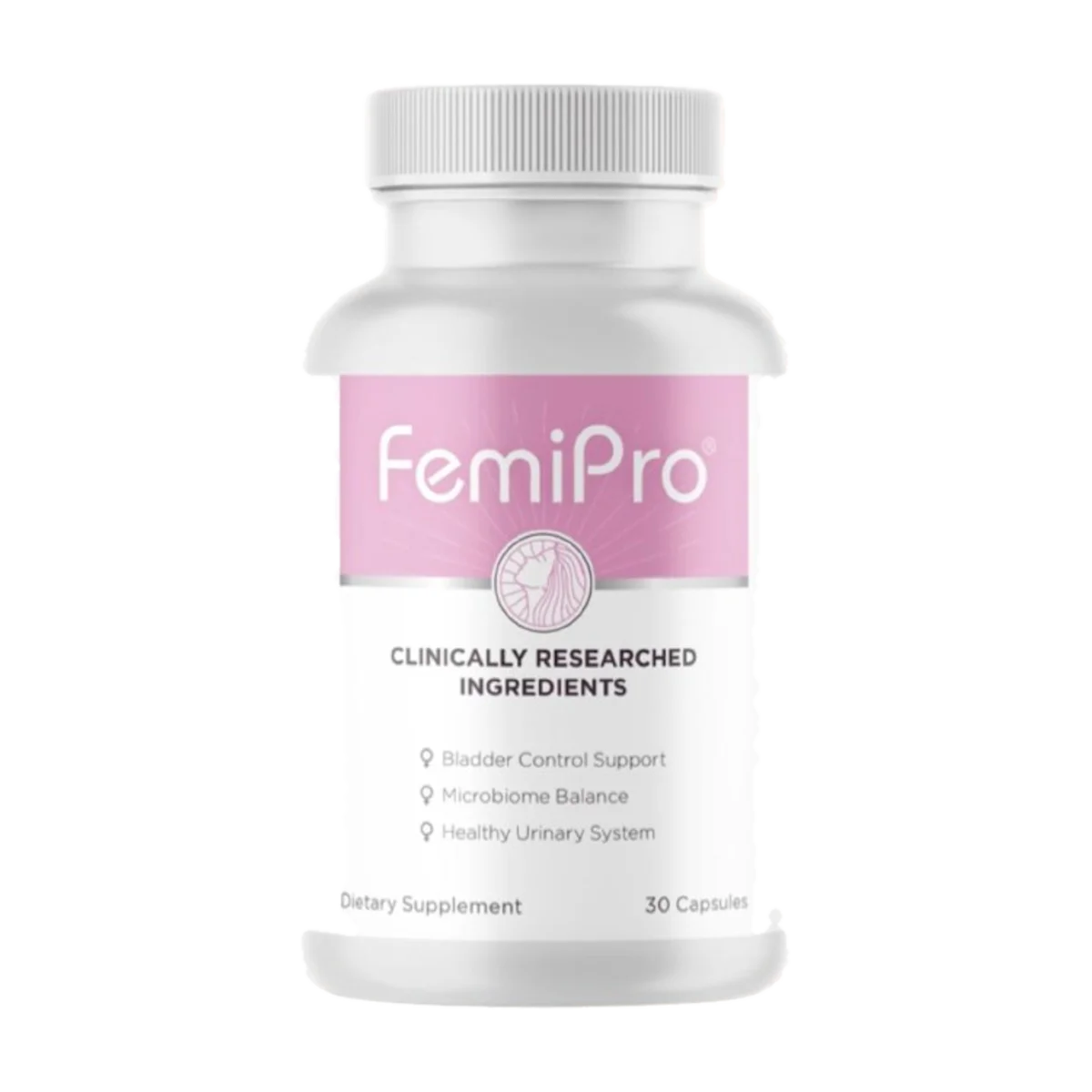
FemiPro is a women's dietary supplement that combines urinary-support botanicals and probiotics in a single daily capsule.
- Supports normal bladder control as part of a daily routine
- Supports a balanced urinary microbiome with five Lactobacillus strains
- Supports a healthy urinary system overall
Overview
FemiPro is a women's dietary supplement that combines urinary-support botanicals and probiotics in a single daily capsule. The label positions it as support for bladder control, microbiome balance, and a healthy urinary system. Each bottle holds 30 capsules — a 30-day supply at the suggested serving.
The producer presents FemiPro as a microbiome-first approach to women's urinary comfort: rather than a single active, the formula pairs traditional urinary-support botanicals with Lactobacillus species associated with the healthy female microbiome. According to the maker, the product is non-GMO and gluten-free, and it is made in the USA in an FDA-registered, GMP-certified facility using foreign and domestic ingredients. It is sold only through the official website, in single- and multi-bottle packages backed by a 60-day money-back guarantee.
As with any supplement, FemiPro is not a medical treatment. The label directs pregnant or nursing mothers, anyone under 18, and individuals with a known medical condition to consult a physician before use.
How it works
The maker describes a two-sided approach. The herbal side supplies botanicals long associated with urinary tract comfort — most notably cranberry extract standardized to 30% proanthocyanidins, the berry compounds most often studied in connection with urinary tract health — alongside bearberry leaf, mimosa pudica seed, and berberine. The probiotic side adds five Lactobacillus strains, a bacterial genus the maker ties to a balanced female urinary microbiome.
Per the producer, the two blends are meant to work together: the botanicals to support a healthy urinary environment, and the probiotics to support the balance of beneficial bacteria. These are the maker's descriptions of intent, not proven clinical outcomes, and individual response varies.
How to use
The label's suggested use is one capsule daily — for best results with 6–8 oz of water, or as directed by a healthcare professional. One bottle of 30 capsules covers 30 days at this serving.
The label advises not exceeding the recommended dose, keeping the bottle out of reach of children, not using it if the safety seal is damaged or missing, and storing it in a cool, dry place.
Benefits
- Supports normal bladder control as part of a daily routine
- Supports a balanced urinary microbiome with five Lactobacillus strains
- Supports a healthy urinary system overall
- Cranberry extract standardized to 30% proanthocyanidins, per the label
- Single-capsule daily serving — a simple routine to keep
- Made in the USA in an FDA-registered, GMP-certified facility
Pros & cons
Pros
- Herbal and probiotic support combined in one capsule instead of two products
- Cranberry standardization (30% proanthocyanidins) is disclosed on the label
- All five probiotic strains are named with strain identifiers, not just species
- One capsule per day — among the simplest regimens in the category
- Maker offers a 60-day money-back guarantee
- Non-GMO and gluten-free, per the producer
Cons
- Both blends are proprietary: the label shows 350 mg and 50 mg totals, but no per-ingredient amounts
- The capsule is gelatin, so the product is not suitable for vegetarians — despite some producer materials describing it otherwise
- Berberine and bearberry are botanicals with known medication-interaction considerations; anyone on prescription drugs should check with a clinician first
- Sold only through the official website, so there is no retail price comparison
Ingredients
- Mimosa Pudica Seed Extract — A seed extract with a history of traditional use, included as part of the 350 mg herbal blend; individual amount not disclosed.
- Cranberry Extract (Vaccinium macrocarpon, berry), std. to 30% proanthocyanidins — The berry compounds most commonly studied in connection with urinary tract health; the standardization is disclosed, the individual dose is not.
- Bearberry (Arctostaphylos uva-ursi, leaf) — A leaf botanical with long traditional use for urinary comfort; herbal references generally frame it for short-term rather than continuous use.
- Granular Berberine Hydrochloride Extract 8% (bark/root) — A plant alkaloid widely studied for microbial balance and metabolic support; known to interact with some prescription medications.
- Probiotic Blend, 50 mg — Five named Lactobacillus strains — L. crispatus LCr86, L. acidophilus LA88, L. plantarum N13, L. gasseri LG08, L. casei LC16 — species associated with the healthy female microbiome.
- Other ingredients — Gelatin (capsule), brown rice flour, magnesium stearate, olive oil, silicon dioxide. The gelatin capsule means the product is not vegetarian.
Ingredients follow the product label (Supplement Facts).
Who it's for
FemiPro is aimed at adult women who want daily nutritional support for bladder control, urinary comfort, and microbiome balance, and who prefer a combined herbal-plus-probiotic formula over managing separate products. It suits people comfortable with a proprietary-blend label and a one-capsule routine sustained over weeks to months.
It is not for everyone. The label directs pregnant or nursing mothers, anyone under 18, and people with known medical conditions to consult a physician first — and because berberine and bearberry can interact with prescription drugs, anyone on medication should ask about compatibility. New, painful, or persistent urinary symptoms deserve a medical evaluation, not a supplement.
Pricing
FemiPro is sold only on the official website, in single- and multi-bottle packages, with the per-bottle cost dropping on the larger bundles. Producer materials mention free shipping and digital bonuses on bigger packages, though offer details change without notice. Every order is covered by the maker's 60-day money-back guarantee; current prices should be confirmed directly on the official order page.
FAQ
How do I take FemiPro?
The label suggests one capsule daily, ideally with 6–8 oz of water or as directed by a healthcare professional. Each bottle of 30 capsules lasts 30 days.
What exactly is in it?
A 350 mg herbal blend (mimosa pudica seed, cranberry extract standardized to 30% proanthocyanidins, bearberry leaf, and berberine HCl extract) plus a 50 mg blend of five named Lactobacillus strains, in a gelatin capsule.
Is it vegetarian?
No. The label lists gelatin as the capsule material, so FemiPro is not suitable for vegetarians or vegans.
Can I take it with my medications?
Berberine and bearberry are known to interact with some prescription drugs. The label directs anyone with a known medical condition to consult a physician first; a pharmacist can confirm compatibility for your case.
Does it treat urinary infections?
No. FemiPro is a dietary supplement, not a medication, and it is not intended to diagnose, treat, cure, or prevent any disease. Symptoms like pain, burning, or fever call for a medical visit.
How long until I notice anything?
The maker frames results around consistent daily use over weeks to months and notes that individual response varies. No timeframe is guaranteed.
Where is it made?
The label states FemiPro is made in the USA, in an FDA-registered, GMP-certified facility, using foreign and U.S. ingredients. It is distributed by FemiPro from Tallmadge, Ohio.
What if it doesn't work for me?
The maker offers a 60-day money-back guarantee on orders placed through the official website.
See the current offer for FemiPro
Packages, pricing, and the producer's guarantee are shown on the official order page.




Disclosure: NaturaPeak earns a commission if you buy through links on this page, at no additional cost to you. Commissions never change what is described here.